10 min read
After-Hours Leasing Inquiries: Why Leads Go Cold Overnight
After-hours leasing inquiries often sit unanswered until morning. See why multifamily leads go cold overnight, what coverage options teams use, and how staff stay in control.
On this page
Introduction
Introduction
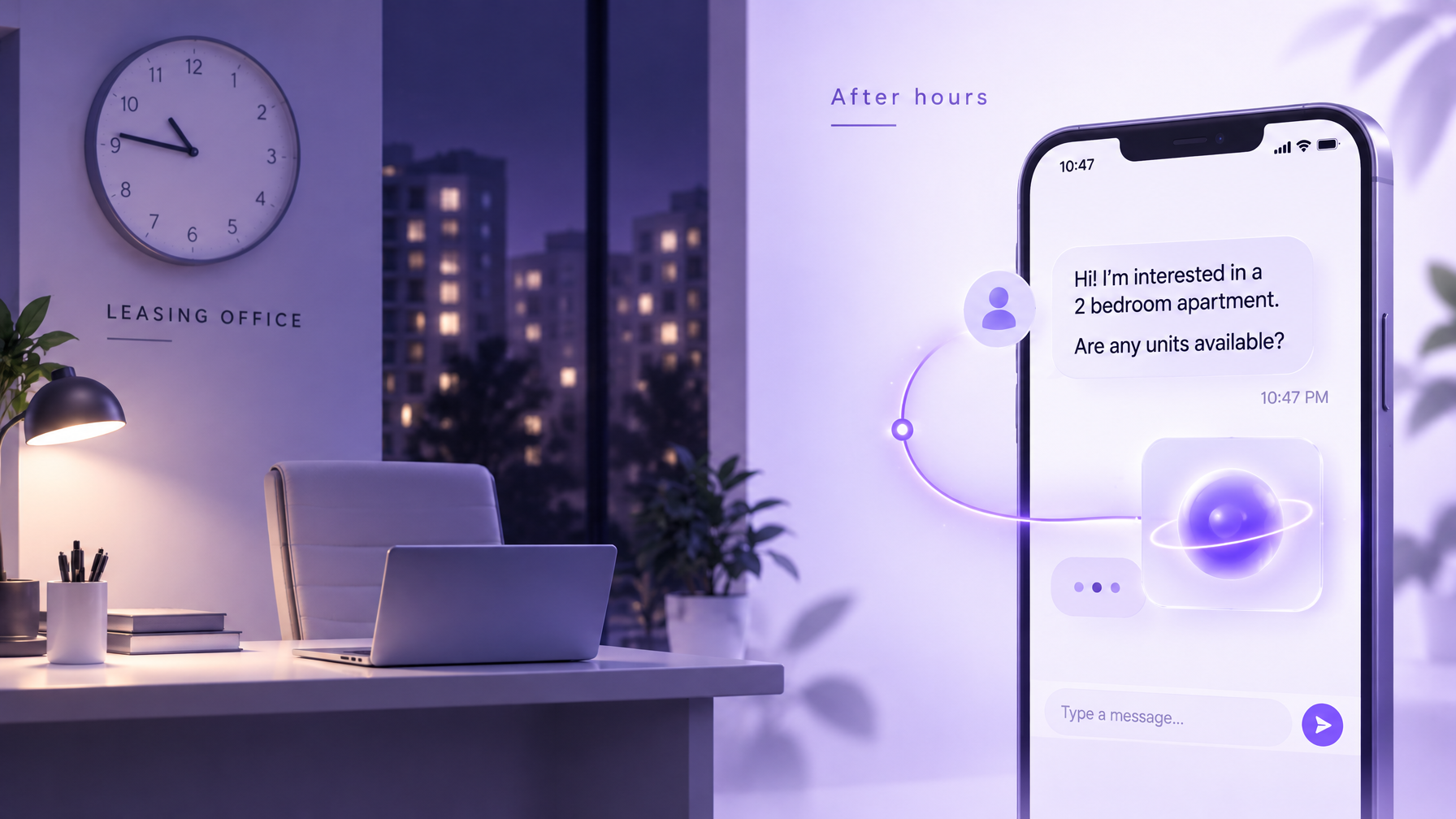
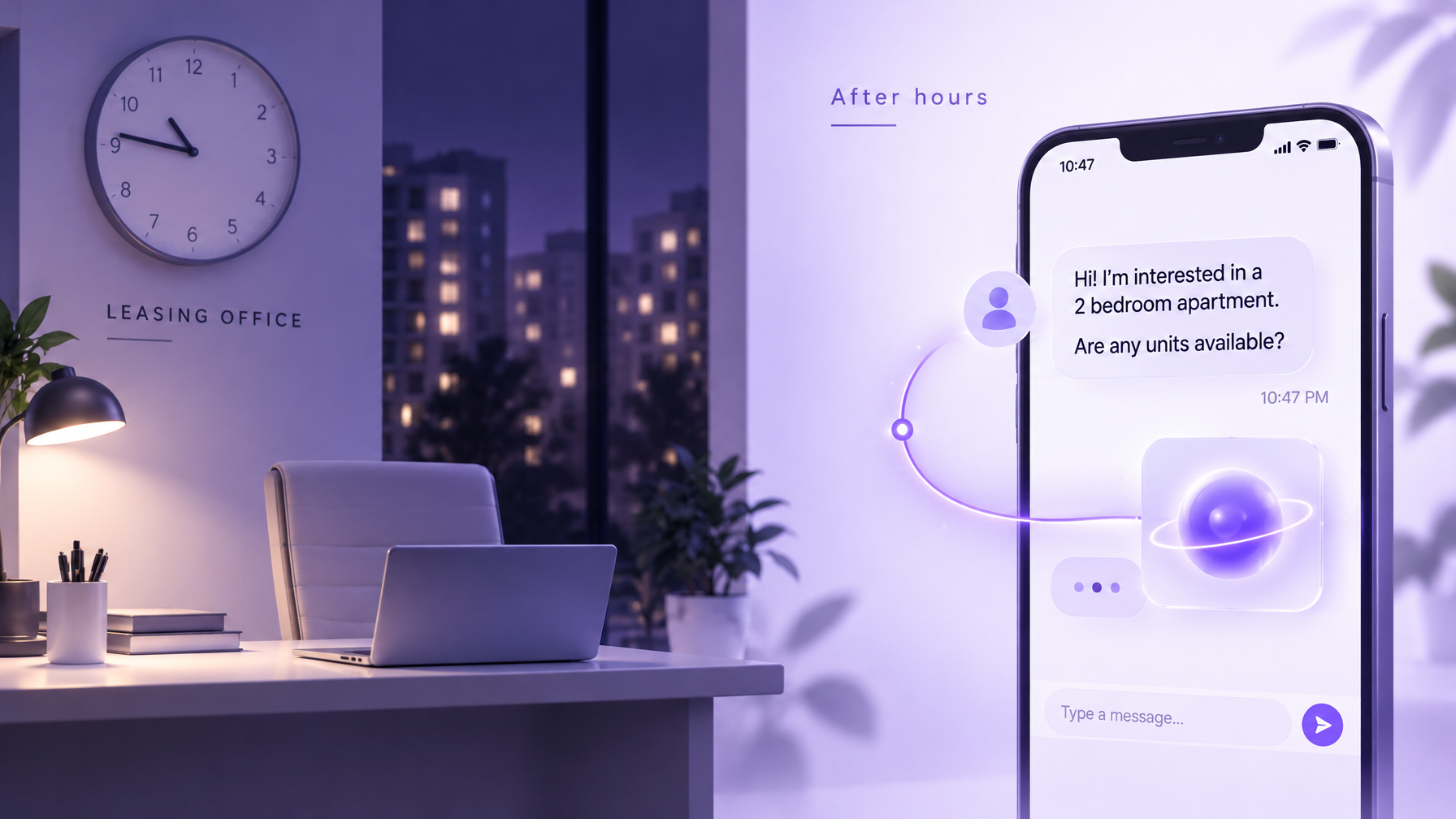
Apartment shoppers do not wait for the leasing office to open. They send messages at night, on weekends, and between work shifts. When nobody answers until morning, many of those conversations cool off before a human ever picks them up.
This guide is for leasing managers, community managers, central leasing teams, and regional operators who feel the overnight gap every week. It explains why after-hours leasing inquiries go cold, what teams usually try, and how to design overnight coverage without pretending staff are optional.
It is not a renter shopping guide. It is an ops playbook for multifamily teams that need a first response after hours and a clean handoff when the office opens.
Short answer
After-hours leasing inquiries are renter questions and interest signals that arrive when the leasing office is closed or staff are offline: evenings, nights, weekends, and holidays.
They go cold overnight when:
- Nobody replies until the next business day
- The first reply is a generic auto-message with no useful next step
- The prospect already moved on to another community that answered sooner
- Morning staff face a backlog with little context
Coverage that helps usually combines three things: a fast first response from approved property information, a clear next step such as a tour request for staff to confirm, and human handoff with full conversation context. AI can support that pattern. It does not replace accountability, exceptions, or final decisions.
Why after-hours volume is a leasing problem
Leasing demand does not follow a 9-to-5 calendar. Industry product pages and operator blogs routinely treat nights and weekends as peak inquiry windows, not edge cases. Vendors and multifamily platforms frame after-hours response as a core conversion lever because renters compare options in real time.
Exact percentages vary by portfolio, channel mix, and market. You do not need a single industry-wide statistic to see the pattern in your own CRM: messages that sit overnight often show weaker tour and application progress than messages answered quickly.
What “going cold” looks like in practice
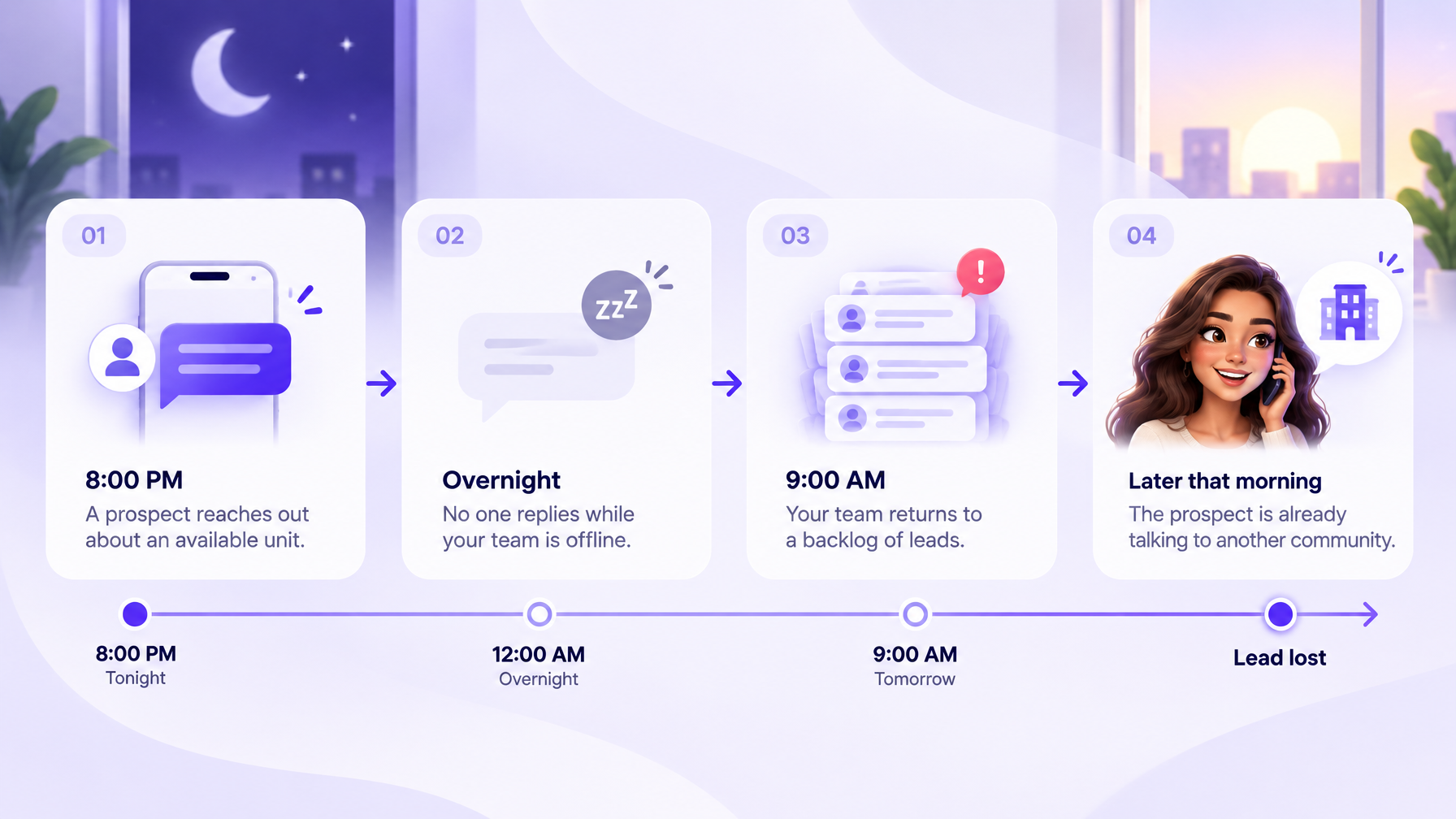
A lead goes cold when intent fades before your team re-engages. Common overnight patterns:
- Silence. The prospect waits, then stops waiting.
- Split attention. They keep shopping other communities while your inbox sleeps.
- Stale context. By morning, staff open a thread with no qualification notes and no preferred tour window.
- Reactive chase. The first human reply is “Sorry we missed you,” after the prospect already scheduled elsewhere.
Speed to lead is a general sales idea that multifamily operators apply to leasing: how quickly someone answers after an inquiry. Industry marketing content (for example from multifamily software vendors) repeatedly ties faster first response to better conversion odds. Treat those as directional industry themes, not as OneBase performance claims. Measure your own overnight → tour rates before and after any coverage change.
What prospects actually need after hours
After-hours work is not “close the lease at midnight.” Most overnight jobs are simpler and more valuable than that.
Useful overnight jobs
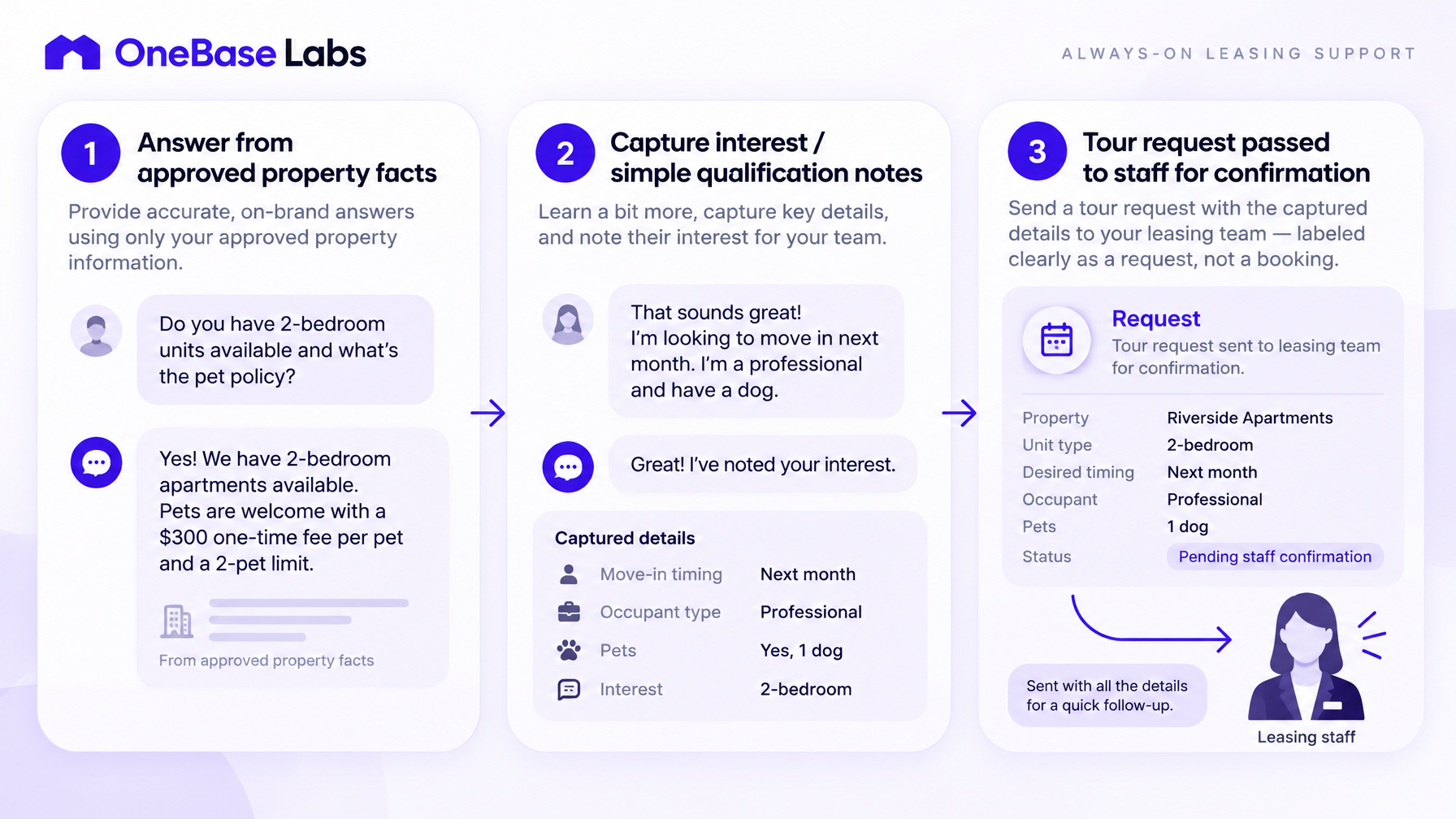
- Answer common questions from approved community facts (floor plans, pets, parking, fees you allow the system to state, availability language you approve)
- Capture interest and light qualification (move-in timing, beds/baths, budget range you choose to ask)
- Help the prospect request a tour with a preferred time, then pass that request to staff for confirmation
- Collect contact details cleanly so morning follow-up is easy
- Escalate when the question needs a person (exceptions, accessibility nuances, concessions, unclear policy)
Jobs that should stay with people
- Final tour confirmation and calendar ownership
- Application decisions and exceptions
- Sensitive or edge-case housing questions
- Brand tone on hard conversations
- Anything your policies say requires human approval
Scheduling honesty matters. A tour request with a preferred time is not the same as a confirmed booking. The visit is not booked until your team confirms it. That is how OneBase presents Mia on the public site, and it is the language this article uses throughout.
What teams usually try (and where each breaks)
1. Do nothing until morning
Lowest cost. Highest overnight silence. Works only if your market is slow and your daytime team is fast enough to recover every delayed thread. Most competitive lease-ups cannot rely on this.
2. Voicemail and “we will call you back”
Familiar. Poor for chat-first renters. Creates a morning call list without answering the original question.
3. Simple website chatbot
Can deflect FAQs. Often fails when the prospect jumps topics, asks a nuanced policy question, or needs a real next step. Many teams already tried a thin chatbot and saw mixed results. The issue is job design, not the word “AI.”
4. Call centers / answering services
Useful for phones and emergencies. Cost and script quality vary. Leasing-specific knowledge and CRM context can be weak unless tightly integrated.
5. After-hours coverage designed as a leasing job
A stronger pattern: first response from approved knowledge, structured capture, tour request for staff confirmation, and visible threads for morning review. That is closer to an AI Leasing Specialist model than to a generic FAQ bot. For definitions, see What Is an AI Leasing Agent? and the broader AI Specialist category article.
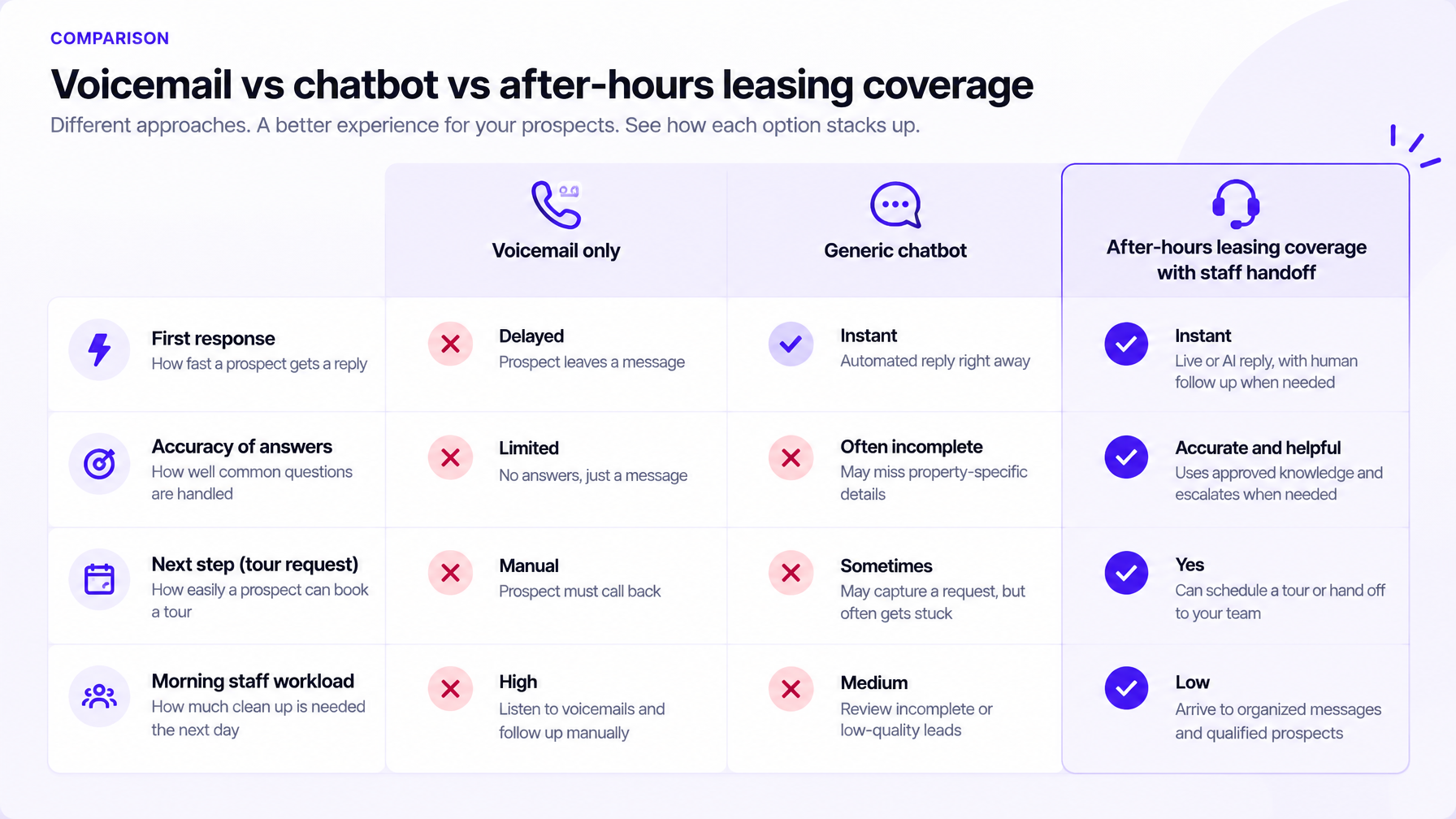
A practical comparison
| Dimension | Voicemail / morning-only | Basic chatbot | After-hours leasing coverage (Specialist-style) |
|---|---|---|---|
| First response | Delayed until staff are back | Often instant, script-limited | Instant when enabled, within approved knowledge |
| Knowledge | Human memory next day | Thin FAQs or menus | Limited to what the business approves |
| Next step | “We will call you” | Rarely a real leasing next step | Tour request + notes for staff |
| Staff morning | Cold backlog | Incomplete threads | Reviewable conversations and handoffs |
| Success looks like | Some recovery calls | Ticket closed | Prospect informed, next step captured, or cleanly escalated |
Design principles for overnight coverage
1. Approved knowledge only
Overnight answers should come from information your team reviewed: rents and fees you allow the system to state, pet policy language, parking, amenities, and availability rules. If the system does not know, it should say so and escalate. Invented policy is worse than a delayed human reply.
2. Capable is not the same as authorized
A system might be able to draft many replies. Your business still decides what it may say and which actions it may take after hours.
3. Tour requests, not silent confirmations
Capture preferred times. Notify staff. Confirm on your process. Do not tell a prospect the visit is booked if a human has not confirmed it.
4. Human handoff is normal
Complex objections, accessibility questions, special concessions, and edge cases belong with people. Escalation is a design feature, not a failure.
5. Morning review is part of the product
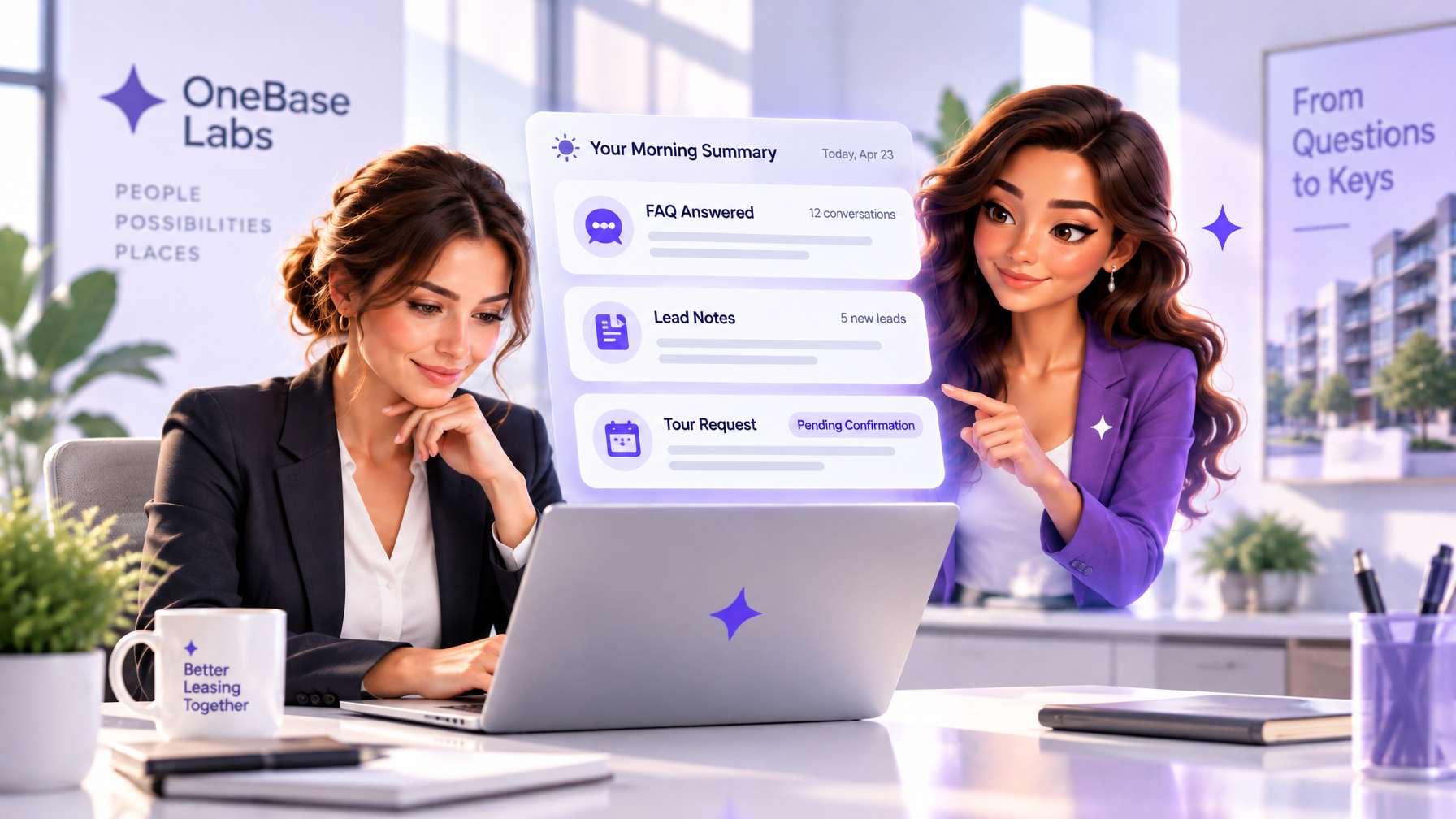
Overnight coverage fails if staff open the day blind. They need conversation history, captured notes, and a clear list of tour requests waiting for confirmation.
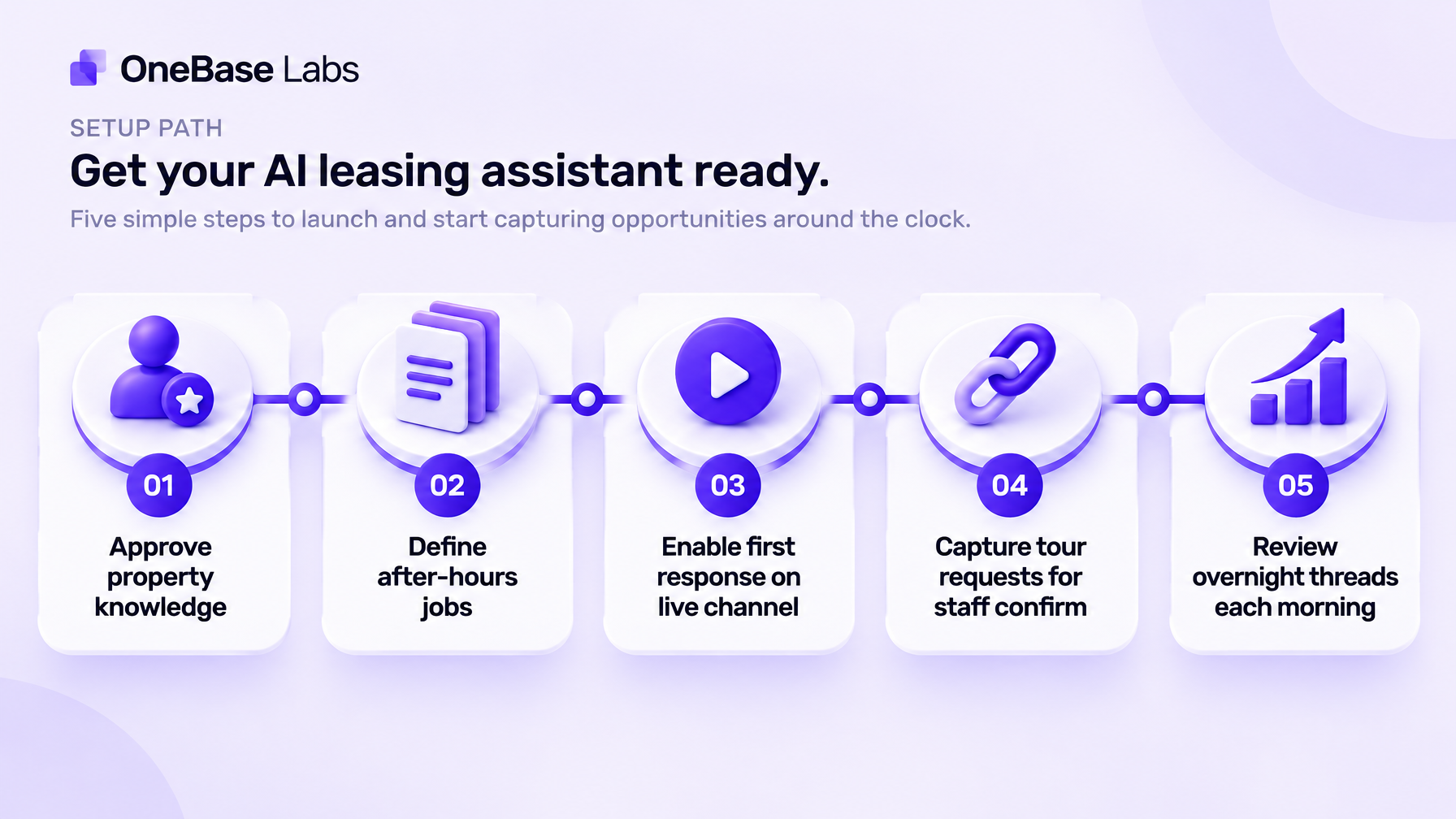
A simple overnight workflow multifamily teams can run
Use this as an internal checklist. Adjust to your CRM and staffing model.
- Approve property knowledge the system may use after hours.
- Define after-hours jobs (FAQ, capture, tour request, escalate).
- Enable first response only on channels that are truly live for your workspace.
- Capture tour requests with preferred times for staff confirmation.
- Review overnight threads every morning and confirm or reschedule tours.
Channel caution
Start where your customers already reach you and where the product is actually live. OneBase’s public setup story for Mia starts with a OneBase-hosted property page, with the website widget as a natural next channel. Do not assume SMS, WhatsApp, or phone are live for every deployment unless your own workspace confirms them. Claim only what is true for your stack.
How OneBase approaches this with Mia
Mia is OneBase’s first commercial AI Leasing Specialist, in early access for real-estate and leasing organizations.
Public product framing relevant to after-hours work:
- Answers from approved property information
- Helps visitors explore properties and submit a tour request with a preferred time
- Passes that request to the leasing team for confirmation (not booked until the team confirms)
- Human handoff when information is missing or the conversation needs a person
- Starts on OneBase-hosted property pages, with the website widget as a next channel extension
- Staff stay able to manage and review the Specialist in a Business Workspace
See How it works and Features.
Not claimed here: named PMS/CRM integrations as live proof, automatic confirmed bookings without staff, application processing, lease signing, SMS/WhatsApp/phone as guaranteed live channels, ROI or conversion statistics, or other industry Specialists as currently available.
If you lead multifamily leasing and want to evaluate overnight-capable coverage with staff still in the loop, the next step is early access for Mia.
For the product definition behind this role: What Is an AI Leasing Agent?
Questions to ask before you buy “24/7 leasing AI”
- Which overnight jobs are in scope on day one? FAQ only, or capture + tour request too?
- Who controls approved knowledge? How do updates go live?
- Which channels are actually live for your properties?
- How does handoff work with full context?
- Is a tour a request or a confirmed booking? Who confirms?
- What can staff see in the morning? Threads, notes, request queue?
- What must stay human by policy?
- Product stage: pilot, early access, or mature suite?
- Proof: will you run your own overnight pilot metrics instead of vendor dashboards labeled illustrative?
- Accountability: who owns brand, fair housing training for staff, and final decisions?
FAQs
Do after-hours leasing inquiries really matter if we call back in the morning?
They can. Many prospects keep shopping while they wait. A morning callback helps only if the lead is still open and your team has context. Overnight silence is a competitive risk in busy markets.
Is a chatbot enough for nights and weekends?
Sometimes for simple FAQs. It is usually weak when the renter needs a real next step, jumps topics, or hits a policy edge. Evaluate job design, knowledge control, and handoff, not the label alone.
Will AI replace my leasing team after hours?
It should not be sold that way. Useful designs handle routine first response and structured capture so people focus on tours, exceptions, and relationships. OneBase positions AI to work alongside Business Staff.
Can Mia book tours overnight?
Mia can help a visitor submit a tour request with a preferred time and pass it to your team. The visit is not booked until staff confirm it. That is the accurate public product language.
What should we measure first?
Start simple: share of inquiries arriving outside office hours, median time to first response overnight, overnight threads that reach a tour request, and morning confirmation rate on those requests. Use your own CRM data. Do not import vendor ROI claims as your baseline.
After-hours leasing inquiries go cold when intent meets silence. Teams recover some of that demand with faster first response, approved answers, clear tour requests, and morning handoff. AI can support the overnight shift when knowledge is controlled and people stay accountable.
OneBase Labs builds that pattern as a Business Workspace with Mia, an AI Leasing Specialist in early access for real-estate and leasing organizations.
Related reading: What Is an AI Leasing Agent? · What Is an AI Specialist?